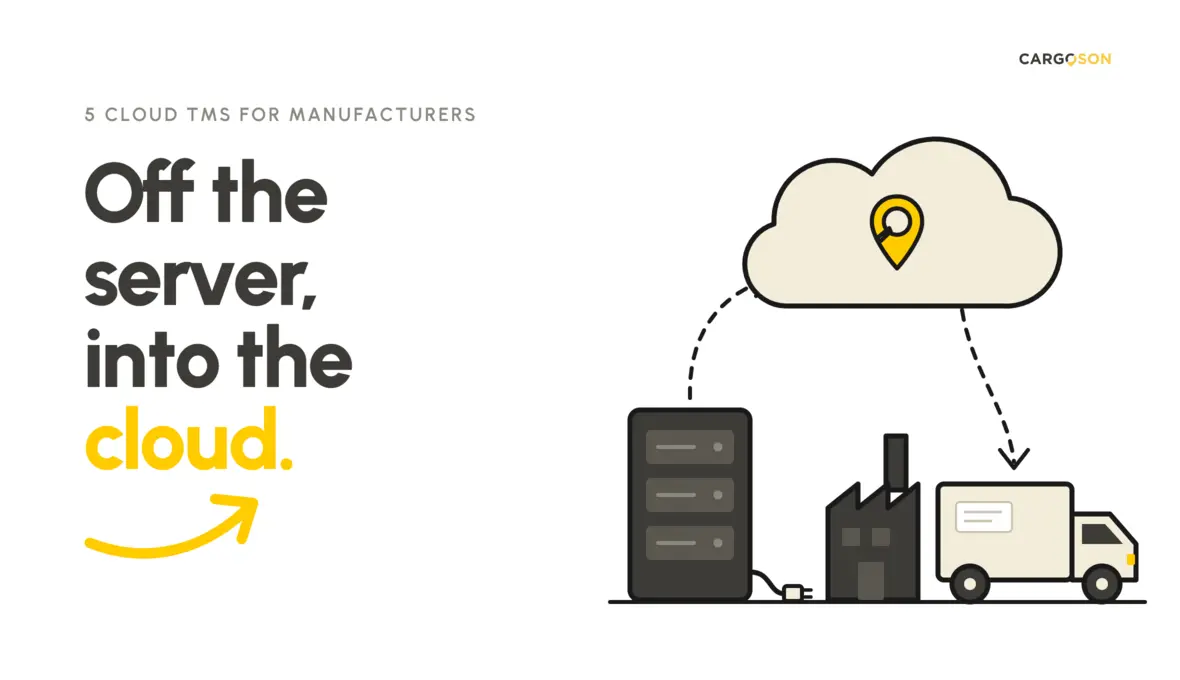
Most on-premise shipping software gets replaced eventually. Either the vendor moves on to a new platform, or a larger-scale IT change leaves the old setup behind.
Once that happens, you need to decide what replaces it and how to switch without stopping outbound shipping. This guide is for European manufacturers shipping parcels, pallets, and full loads.
Why on-premise shipping software is being retired now
Most on-premises shipping tools were bought between 2005 and 2015 to print parcel labels from the ERP. Now the vendors that make these tools, and the ERPs they connect to, are moving to new platforms.
The deadline calendar

Your software keeps running after each of these dates. From 2027 on, though, you carry more of the risk yourself.
Running HVS32? What the Heidler change means for you
In July 2026, Heidler announced that Heidler UNIFY will replace HVS32. HVS32 gets no new features from Q2 2027, and Heidler has committed to support security updates until at least Q2 2028. UNIFY launches as a self-hosted product on Windows or in Linux containers. Cloud hosting comes with the Enterprise Plus bundle, and a SaaS version is planned for later.
HVS32 users have two options: stay with Heidler and migrate to UNIFY, or move to a cloud-based TMS with the same file interface.
With Cargoson, your ERP system continues to produce the same shipping file (IMP, ART and GEF records, CSV or fixed width). Labels print on the same network printers. The return file with carrier, tracking number and ship date comes back in the same layout. You only change where the file is sent.
See how the switch from HVS32 works.
Carriers change their system every year
Carriers update their labels, data formats and services every year, and some retire whole API versions. AEB says this pace is why on-premise multi-carrier software is costly to maintain. If the software runs on your own server, your IT team has to test and install an update for each change.
Costs that never show up as one line
The cost of on-premise shipping software is rarely visible in the budget, because it is spread across five areas: the Windows server, licenses per workstation, paid modules for freight rates or tracking, the annual maintenance contract, and the time of the person who knows how everything fits together. When that person goes on holiday, the true cost becomes painfully apparent.
Migration is the second reason. Moving from an old on-premise version to a vendor's new platform takes almost as much work as a new implementation, which is why many shippers compare vendors before they migrate.
Cloud vs on-premise vs ERP shipping module
Manufacturers replacing shipping software usually weigh three options: a cloud TMS, a new on-premise system, or integrating carrier connections into the ERP itself.
Cloud TMS | On-premise shipping software | ERP shipping module or custom integrations | |
Upfront cost | Setup fee + monthly subscription | Workstation licenses, server, maintenance contract | Developer or ERP partner hours per carrier |
Time to go live | Weeks per site | Months, plus an install at each site | Months per carrier integration |
Updates | Shipped by the vendor, no downtime | Installed by your IT, often versions behind | Built by your team or ERP partner |
Carrier label or API changes | Vendor updates the connection | You wait for a patch, then install it | You rebuild the integration |
Transport modes | Parcels, pallets, LTL, FTL in one place (check per vendor) | Mostly parcel-first, freight often a paid module | Usually 1-3 carriers |
Access across sites | Any browser, any site | Installed per site or over VPN | Wherever the ERP runs |
IT burden | Vendor hosts, patches, backs up | Your IT team | Your IT team and ERP partner |
Key-person risk | Low: standard screens, vendor support | High: one person knows the setup | High: the developer who built it |
Cloud TMS
On-premise shipping software
ERP shipping module or custom integrations
With any of the three, most manufacturers can keep the warehouse workflow exactly as it is. The change is who maintains the software behind it. For the basics of cloud TMS, see our guide to cloud-based transport management software.
5 criteria for choosing a cloud-based TMS to replace on-premise software
1. It keeps your ERP interface
The safest replacement is one that your ERP system does not notice.

A file interface is the fastest way to switch, and you can change it later. Once you’re live, you can move to an API or a native ERP connector when it suits you. Cargoson offers ready integrations with SAP, Dynamics 365, NetSuite, Odoo and more.
2. It connects the carriers you already use
Take a German machinery manufacturer that ships with DHL Freight, DSV and DACHSER, plus a regional carrier for heavy machine parts. A good cloud-based TMS has the first three live on day one with the company's own negotiated rates. The regional carrier is set up during onboarding at no extra cost. No contracts need to be renegotiated and no carrier has to change how they work.
This last point is more important than it seems. The fear of carriers pushing back prevents more switches than price does.
3. It covers every mode you ship
A machinery plant can ship 40 parcels of spare parts, 12 pallets, and two full trucks on the same day. Most legacy shipping tools were built for parcels. If the replacement is another parcel tool, the pallets and trucks will continue to be booked via email and phone, and so do their costs.
4. It prints where you print today
The packer scans the delivery note and the label comes out of the same Zebra printer as the day before. Meanwhile, the tracking number is sent to the ERP system before the pallet is wrapped. Nobody in the warehouse needs to know that the software has changed.
5. Hosting, security and pricing you can explain to IT and finance
The IT department will ask where the data is stored. Finance will ask how much it will cost over three years. Have both answers prepared in advance.
What you pay for | On-premise | Cloud TMS |
Software | Licenses, often per workstation, plus upgrade fees for new versions | One subscription |
Infrastructure | Your own server, backups and replacements | Run by the vendor |
Add-ons | Rates, tracking and other features often sold as modules | Usually part of the subscription (check per vendor) |
Maintenance | Annual contract | Included |
Carrier changes | Your IT team's time for each update | Handled by the vendor |
New carriers | Often a separate project | Included with some vendors |
How costs behave | Large upfront spend, then irregular costs | A predictable monthly or annual fee |
5 cloud-based TMS options for European manufacturers
All five are European vendors. Which one fits depends on where you are starting from. For the wider market, see our Top 17 TMS for shippers.
Cargoson is designed for manufacturers and wholesalers that ship parcels, pallets, and full loads with their own carriers. It reads your existing ERP file, connects to over 2,000 carriers and creates new connections at no extra cost. This means you won't have to wait for a carrier to implement a standard format itself. It is not the right fit for e-commerce businesses that only ship parcels.
Heidler UNIFY is the obvious choice, if you want to stay with Heidler. Plan for a migration project and a self-hosted installation at launch. Heidler is committed to providing HVS32 support and security updates until at least Q2 2028, which gives you time to plan. If your HVS32 setup relies on paid extension modules such as carrier web service connections, the HFMS freight cost module, or the SEM status module, check which ones carry over to UNIFY and what the cost will be.
Transporeon suits large European shippers with significant FTL volumes. It specialises in spot-market tendering and freight benchmarking across a network of over 150,000 carriers, most of which are based in Europe, and is used by over 1,400 shippers. It is a heavier system than most mid-sized companies require.
Alpega TMS is ideal for mid-sized European shippers with significant road freight requirements. It excels in freight procurement, offering contract and spot rates, benchmarking, and spot requests, all supported by a network of over 80,000 transport professionals across Europe. Carriers not on the platform usually have to implement Alpega's standard EDI, which is time-consuming and costly.
SAP TM is ideal for existing SAP customers committed to S/4HANA and looking to manage transport within the SAP system, particularly for large FTL volumes. It connects closely to other SAP modules and handles complex, global scenarios across all modes. As a standalone TMS, it is not ideal.
Why manufacturers replace on-premise shipping software with Cargoson
Cargoson is a cloud-based TMS designed for manufacturers and wholesalers, built so the switch from on-premise software changes as little as possible.
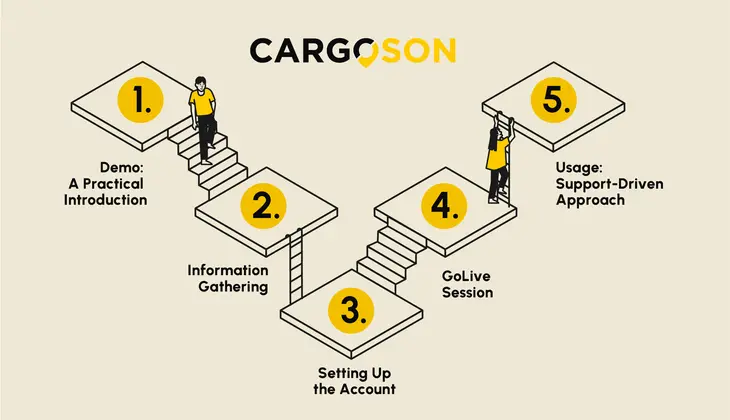
- Your ERP file remains unchanged. During onboarding, we review your layout and set up the import and return files.
- Your carriers stay. Over 2,000 carrier integrations, and we build new ones at no extra cost.
- Your printers stay. Labels print to network label printers or return to the ERP as a link.
- All modes in one place. Parcels, pallets, part and full loads, and air, sea and rail.
- IT hosting can be signed off. We are AWS certified in Frankfurt and ISO 27001 certified.
- Finance can plan pricing. There is a one-off setup fee and a subscription fee, with no additional fees per shipment, carrier or user. See pricing.
When the Norwegian retailer Stokker changed its ERP system, it connected all its transport partners to Cargoson instead of rebuilding each carrier integration within the new system. Now, just two people manage 15,000 shipments per month.
Read the full Stokker case study.
An independent 2025 Master's thesis at TalTech measured the results after Stoneridge Electronics implemented Cargoson: transport costs decreased by 27%, customer on-time delivery increased from 87% to 94%, and supplier reliability increased from 82% to 91%.
If you currently use HVS32, our HVS32 alternative page provides information on the file interface, Heidler's timeline, and a side-by-side comparison.
Before you decide
Three things matter:
- The risk of staying grows every year after your vendor's support date.
- A cloud TMS turns a capital project into a predictable subscription.
- A phased switch runs one site at a time running in parallel, so production keeps shipping.
We will walk you through the software and test it with your real data.

 LinkedIn
 Cargoson